This is part of a series highlighting MCN members across the state, featuring a vast array of nonprofit focus areas, and celebrating the myriad ways nonprofits enrich lives.
We recently spoke with Grand Marais Art Colony Artistic Director Ruth Pszwaro about the art scene on the North Shore, new initiatives by the Art Colony, and the role that art plays for both artist and viewer. The Art Colony is an artist-centered space offering residencies, classes, signature events, and exhibitions located in Grand Marais, Minnesota. Read the full Q&A here:
What do you think is unique about the Grand Marais art scene?
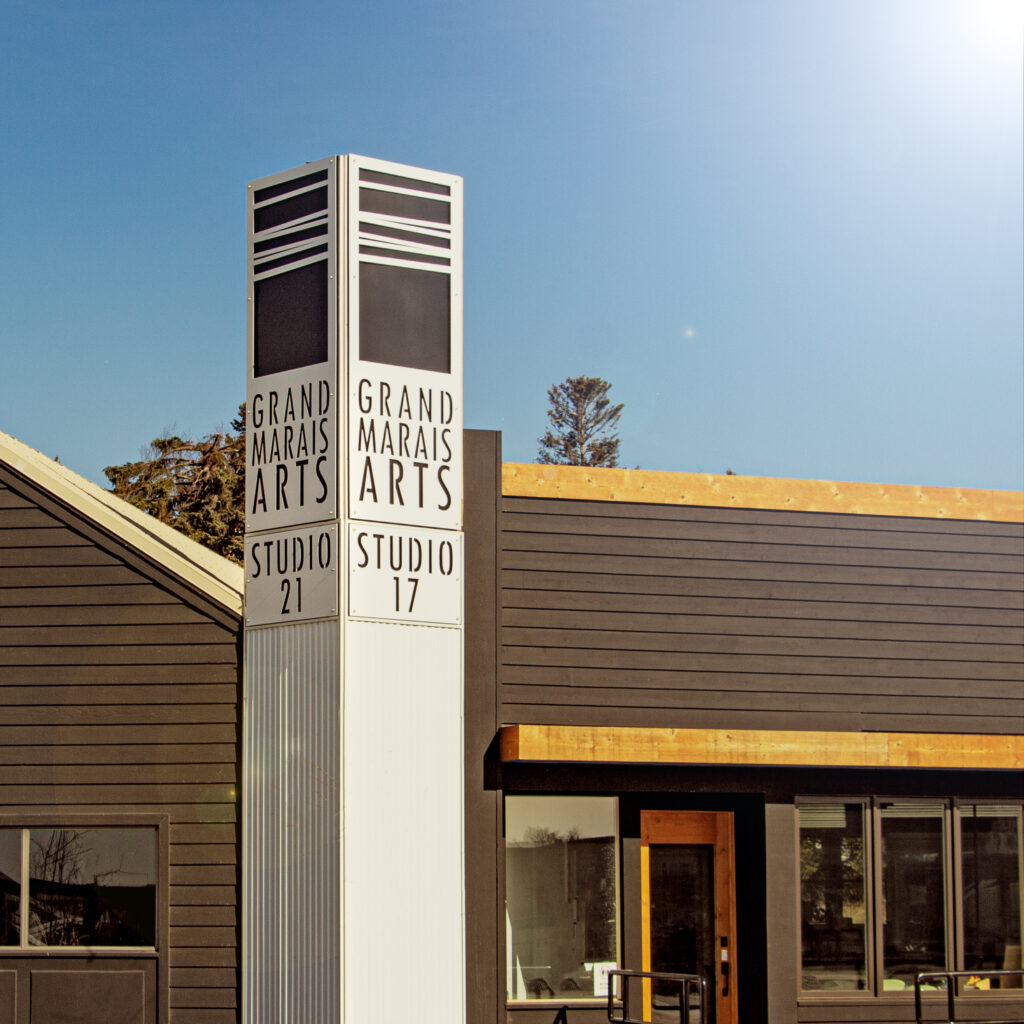
The Band of Lake Superior Chippewa and others who came before them have certainly known for centuries that the riparian edge between land and water is inspiration for imaginative work; the geology of the area and the saltless sea have welcomed many admirers throughout history. Similarly, when the Art Colony was established in 1947, our founder, Birney Quick, saw the landscape as this tremendous presence in Minnesota and a gift to the imagination.
The Big Lake, the boreal forests, and the surrounding water systems were perfect for his focus of outdoor painting. It didn’t hurt that he was also a fly fisherman and the North Shore is a premier destination for fly fishing. So Birney and his co-founder, Byron Bradley, teamed up to host six-to-eight-week summer sessions and threw their net wide. Not only did they host adult and youth art classes, they also invited well-known musicians and poets as well as ballet and theater troupes to the area. As artistically-minded people are drawn to this place, the Art Colony serves as an anchoring arts organization in the Great Lakes region, able to provide them with space, time, and resources for artistic development and exploration.
What are you excited about for Grand Marais Art Colony in 2026?
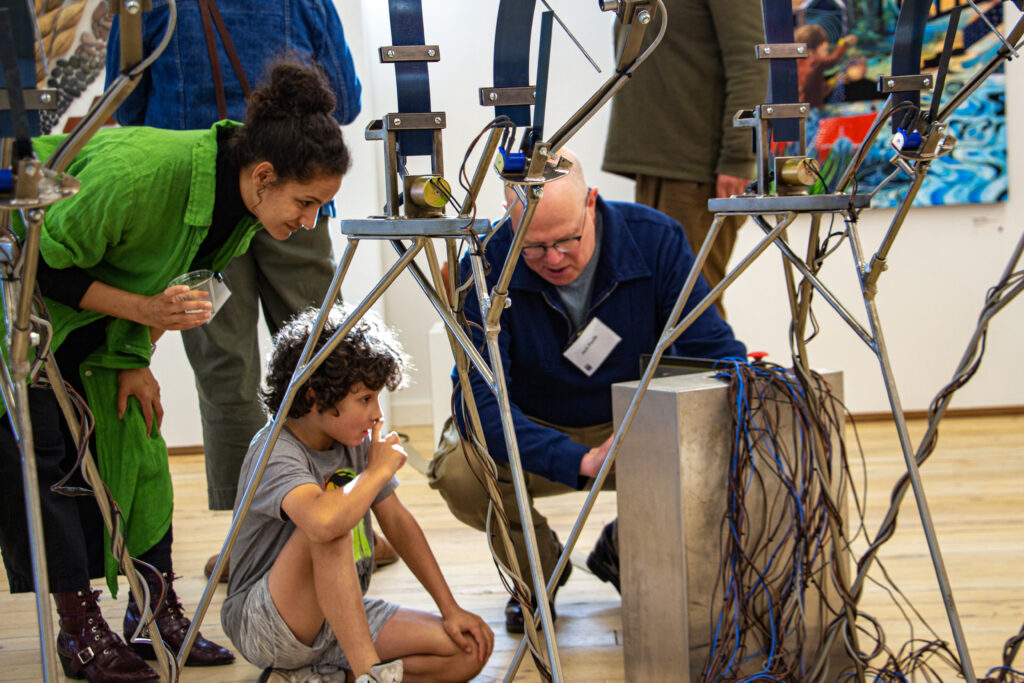
I am excited about how the Art Colony is tackling arts accessibility. We have worked hard to provide approachable opportunities for our arts community. We have expanded our studio access programs, particularly in our ceramics and printmaking studios, we have ongoing partnerships with the county’s schools, support our local Empty Bowls fundraiser, have scholarships for all of our programs, and later this year, we will be able to expand to offer subsidized student lodging.
We just recently completed an ADA-amenable guest suite for artists-in-residence and instructors as well as an accessible outdoor classroom space and I look forward to using these spaces.
Can you describe the partnership between the Art Colony and Public Functionary (PF)? What is the intention behind that partnership, and what does it look like now?
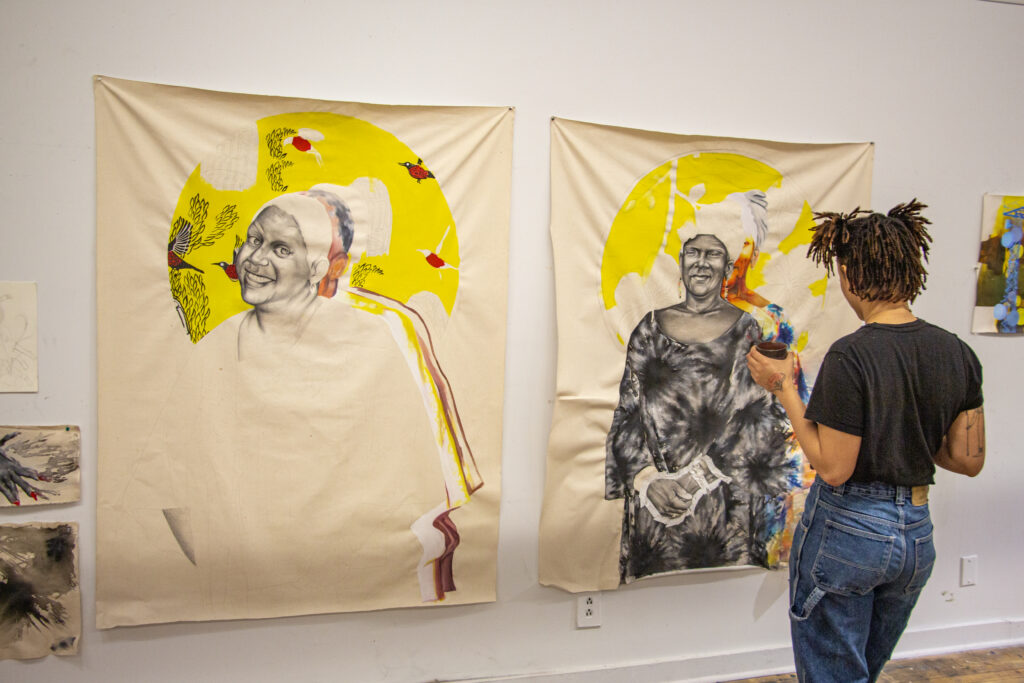
Public Functionary is a fantastic studio program in the Northrup King building that supports career artists who identify as Black, Indigenous, people of color, queer, trans and gender fluid. The studios are a multi-disciplinary exploration and collaboration. We connected with PF Studios Director, Leslie Barlow, in 2019, after she made her first trip to the North Shore. She started to wonder how to get more emerging artists to the North Shore to experience the landscape and it was a natural fit for us to start a partnership in that vein.
Residencies are a huge career builder for artists and we were well-positioned to host a PF cohort as we currently host 100 residents each year in one of our five studios. We jointly crafted a juried residency that would align with both of our missions. We wanted to introduce PF Studio artists to this opportunity, providing them with professional development experience along the way. We view this as a long-term reciprocal partnership.
How do you balance supporting the local community and being a destination art center?
Most people outside of the area know Grand Marais as a visitor destination. We are a county of just over 5,000 but we welcome over 1.2 million visitors year round. So we are certainly a community of exchange and that interchange of perspectives, ideas, ways of living, and economy keeps us a vital wilderness area.
On a local level, we have been in Grand Marais, Minnesota, for 79 years now and are firmly rooted in this place and community. We partner with the schools and the one K-12 grade art educator. We also provide studio access for those artists who are here year round, particularly in our printmaking and ceramics studios, where artists can work on projects independently. Having medium-specific equipment is expensive and we are pleased to run cooperative studio spaces to make it available to those in our community to go deeper in their discipline.
This year is off to a very difficult and tumultuous start – what role do you see art playing in 2026?
The essential practice of making art, while not always worked out in this way, is meant to honor multiple narratives and perspectives. As Gustav Klimt said, “Art is a line around your thoughts.” And those thoughts and how we draw that line are completely unique for each of us. In our current reality, the diversity of opinions and story are being attacked. Through interpretation and innovation and simply allowing space and time for reflection and generation, the arts have the ability to allow a diversity of thought to co-exist. This is a good and necessary part of our democracy.
Art, in its truest form, is not a product or something to consume. It is an experience for the maker and the viewer that may connect with memory, values, universal ideas, and our humanity. In our bottom line world, it is good to preserve things that cannot be measured, bought or sold.
Ruth Pszwaro
While I believe some art has an incredible role to play in a community’s health, healing, and social cohesion, we can too quickly assign the arts as a whole, to the role of healer or prophet. And we have to be careful as some art is, in its purest form, an act of bringing something into the world whose purpose is not known. And that is just as valid as an artistic act that shows an immediate outcome. Art, in its truest form, is not a product or something to consume. It is an experience for the maker and the viewer that may connect with memory, values, universal ideas, and our humanity. In our bottom line world, it is good to preserve things that cannot be measured, bought or sold.
You can learn more about Grand Marais Art Colony at grandmaraisartcolony.org.